Yukon Solitaire
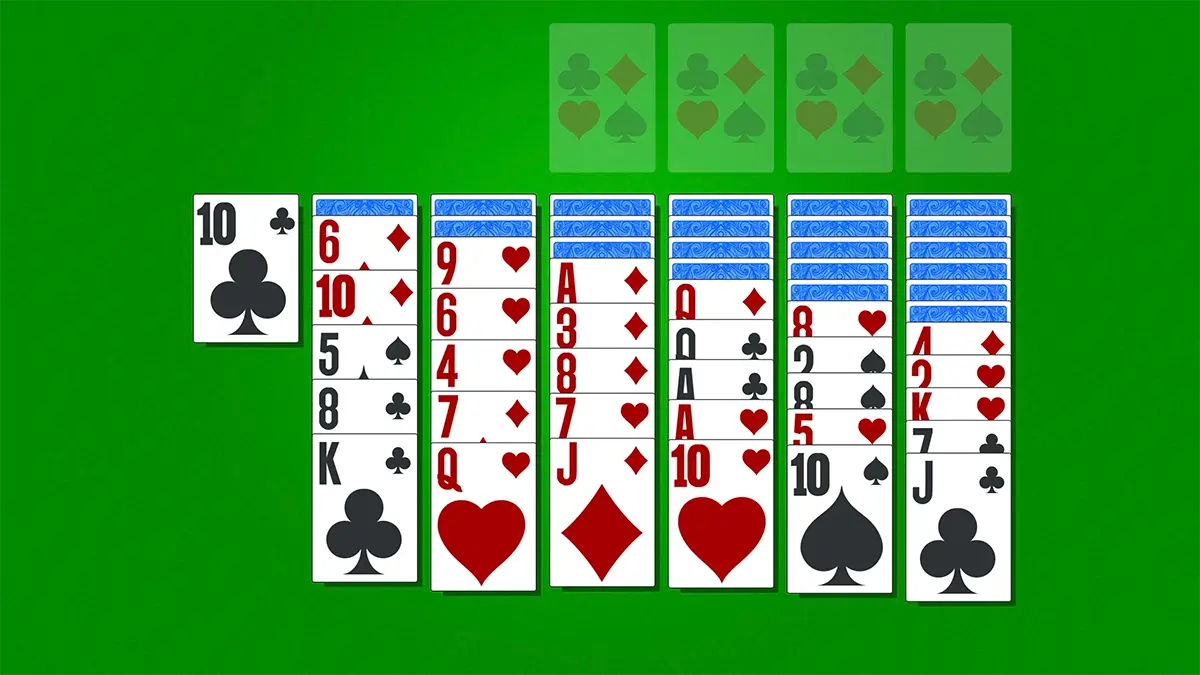
Game preview
Solitaire GamesUpdated
Yukon Solitaire
Bold Moves and Freedom of Play
I've always appreciated how solitaire games can feel so distinct, even when they share the same basic rules. Yukon Solitaire stood out to me the moment I discovered it—it looks familiar at first glance, but that illusion fades fast. The ability to move any visible card, no matter what's stacked above it, completely changes how you think several moves ahead. It's a deceptively tough game. Even now, after hundreds of rounds, I still lose more often than I win. But that’s part of what makes it so compelling. I’ve built this version to play right in your browser—no downloads, no signups—whether you're on your phone, tablet, or computer. If you're up for a tougher challenge than Klondike, Yukon might be the perfect next step.
How Do You Play Yukon Solitaire?
Yukon Solitaire has a unique movement rule that sets it apart from other solitaire variants:
- Basic Movement: Build descending sequences with alternating colors in the tableau columns (like Klondike).
- Unique Rule: You can move any visible card in a column, regardless of what cards are on top of it. All cards above it move along with it as a group, even if they aren't in sequence.
- Empty Columns: Only Kings can be placed in empty tableau columns.
- Foundation Building: Build up each foundation pile from Ace to King by suit.
- Face-Down Cards: When you move a card and expose a face-down card beneath it, that card is turned face-up.
- Goal: Move all cards to the foundation piles to win.
New to Yukon or looking to improve? Read the complete Yukon Solitaire Guide →
The Setup
Yukon Solitaire uses a standard 52-card deck without Jokers. Here's how the game is set up:
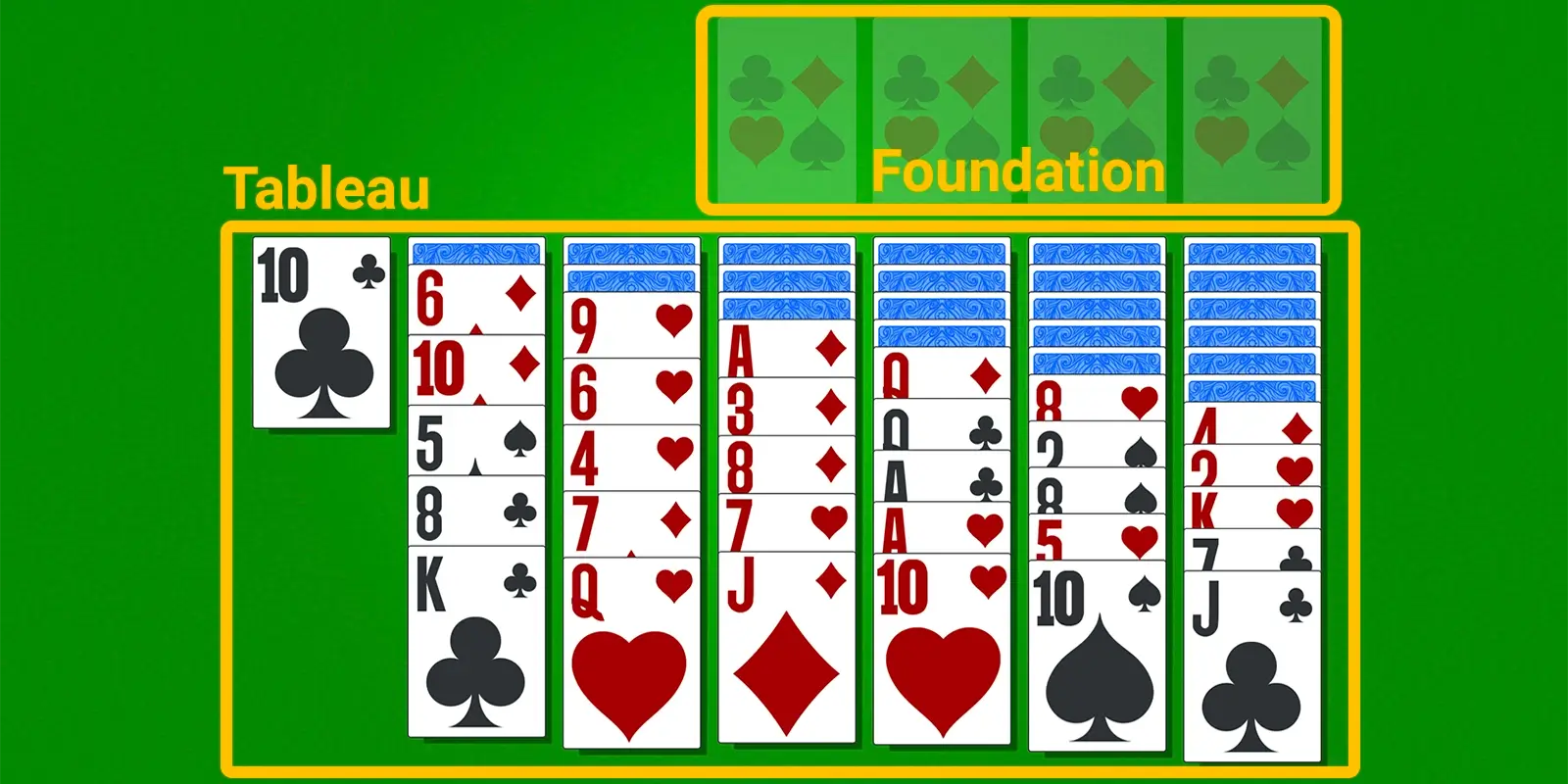
- The Tableau: Seven columns with varying numbers of cards. The first column has 1 card, the second has 6 cards, third has 7 cards, fourth has 8 cards, fifth has 9 cards, sixth has 10 cards, and seventh has 11 cards.
- Card Arrangement: The top 5 cards of each column (except the first) are face-up, while any cards below them are face-down. This creates an initial challenge of exposing those face-down cards.
- The Foundation: Four empty piles at the top for building up each suit from Ace to King.
- No Stock Pile: There's no draw pile - all cards are in play from the beginning.
What Does a Yukon Opening Actually Give You? We Dealt 100,000 to Find Out
We ran 100,000 random opening deals through the same deal engine that runs the game on this page, and measured what players actually face on the first board. The surprise: Yukon shows you 31 of 52 cards from move one — but the average opening offers just 7.3 legal moves, and across all 100,000 deals we never saw more than 14. Seeing 60% of the deck is not the same as being able to use it. All that visibility funnels through the alternating-color, descending-rank rule into a handful of genuinely playable options, which is why Yukon feels tight from the first move despite its famous "move any visible card" freedom.
| Opening board (31 face-up cards) | Result |
|---|---|
| Legal moves available (average) | 7.3 |
| Most legal moves seen in any opening | 14 |
| Openings that can flip a face-down card on move one | 76.2% |
| Openings with at least one ace immediately playable | 44.7% |
| Openings with all four aces buried face-down | 2.3% |
| Openings that can empty the single-card column on move one | 26.6% |
| Openings with zero legal moves | 0.004% |
Card & Puzzle deal-engine analysis, August 2026 · 100,000 random deals · fixed seed range
These numbers put hard edges on the strategy advice below. Exposing face-down cards is the standard first priority, and the deal usually cooperates: 76% of openings offer at least one move that flips a hidden card immediately, though the average opening offers only 1.3 of them — they are precious, and spending them well matters. Ace timing splits your games almost exactly in half: in 45% of openings an ace is sitting on top waiting for the foundation, while in the other 55% you will have to dig, and in an unlucky 2.3% all four aces start among the 21 face-down cards.
The single-card first column is Yukon's quiet opening battleground. In 26.6% of deals you can move that lone card somewhere legal on move one and open up an empty column immediately — and almost every time that happens, a face-up King is already on the board waiting to claim the space. Whether to spend the space on that King right away is another question; as the strategy section explains, a King planted in an empty column is going nowhere without its whole stack.
One comparison worth knowing: Yukon and Klondike bury exactly the same number of cards — 21 face-down in the tableau in both games. The difference is everything else. Klondike hides another 24 cards in the stock and shows you 7; Yukon deals the entire deck to the table and shows you 31. That is the whole character of the game in one number — near-complete information, narrow options, and nobody to blame but the plan.
A note on how deals work here: the numbers above describe raw random shuffles — the same odds as a physical deck. Our Yukon game deals hands verified winnable in advance by default, so every deal you are given can be beaten with the right line of play.
How Is Yukon Solitaire Scored?
Your score in Yukon Solitaire comes from both your moves and your completion time:
Move Points
| Action | Points |
|---|---|
| Move to Foundation | +10 |
| Move Between Tableau Columns | +2 |
| Move from Foundation to Tableau | -15 |
| Flip a Face-Down Card | +5 |
Time Bonus
- Formula: 800,000 divided by your completion time in seconds
- Example: Finish in 4 minutes (240 seconds) = 3,333 bonus points
- No time bonus for games under 30 seconds
What Are the Best Strategies for Winning Yukon Solitaire?
- Expose Face-Down Cards: Your first priority should be to expose as many face-down cards as possible to increase your options.
- Aces to Foundations: Moving Aces to the foundations early is critical to creating space and building your foundation piles.
- Look Before You Leap: Since you can move any visible card, take time to consider all your options before making a move.
- Create Access: Focus on moves that access and organize cards buried deep in the tableau.
- Empty Column Value: Be strategic about creating and using empty columns - they're valuable real estate.
- King Caution: Be careful about moving Kings to empty columns since you can't move them again without their entire stack.
- Think Ahead: Plan multiple moves in advance, especially when considering whether to move large stacks of cards.
Why Play Yukon Solitaire?
- Unique Movement Rules: The ability to move any visible card with all cards above it creates distinctive gameplay not found in other solitaire variants.
- No Stock Pile: Unlike Klondike, there's no stock pile to cycle through - all cards are in play from the beginning.
- Freedom of Movement: Enjoy the flexibility of being able to access and move any visible card on the tableau regardless of what's above it.
- Strategic Depth: The unique movement rules create complex decision trees and opportunities for clever play.
- Perfect Balance: More challenging than Klondike but still approachable for players of all skill levels.
Ready to Test Your Strategic Skills?
Yukon Solitaire offers a perfect balance of accessibility and strategic depth. With its unique movement rules and full visibility of all cards, every game presents a fresh puzzle to solve. Start playing now and see if you can master this distinctive solitaire variant! Can you find the winning sequence of moves in today's game?
Explore More Puzzles
Yukon players tend to enjoy spatial challenges. Our jigsaw puzzles offer exactly that — try the abstract collection for pure pattern recognition, or start easy with our beginner puzzles.
Frequently Asked Questions
How do you play Yukon Solitaire?
To play Yukon Solitaire, you build descending sequences with alternating colors in the tableau columns (like Klondike). The key difference is that in Yukon, you can move any visible card regardless of what's on top of it, along with all cards above it - even if they're not in sequence. You start with some face-down cards that are revealed as you move others. You can only place Kings in empty columns, and the goal is to move all cards to the foundation piles in ascending order by suit.
What makes Yukon Solitaire different from Klondike?
Yukon Solitaire differs from Klondike in several important ways: there's no stock or waste pile to draw from, and most distinctively, you can move any visible card in a tableau column regardless of what's on top of it, along with all cards above it. While some cards start face-down like in Klondike, the unique movement rule creates a very different strategic experience.
What are the best strategies for winning Yukon Solitaire?
Effective strategies include prioritizing moves that access buried cards early, being careful about moving Kings to empty columns since you can't move them again without their stack, creating opportunities to consolidate tableau stacks, looking multiple moves ahead, and not rushing to move cards to the foundation until you've organized your tableau thoroughly.
Is Yukon Solitaire harder than Klondike?
Yukon Solitaire is generally considered more challenging than Klondike because it requires more strategic thinking and careful planning. The ability to move any visible card creates more options but also more complexity. And because every card is dealt into the tableau from the start with no stock pile to draw from, your success depends far more on planning and skill than on the luck of the draw.
How many useful moves does a Yukon opening really have?
Fewer than the open board suggests, and we have first-hand numbers. We dealt 100,000 random openings through this site's own deal engine: Yukon shows you 31 of 52 cards from move one, but the average opening offers just 7.3 legal moves, and across all 100,000 deals we never saw more than 14. Seeing most of the deck is not the same as being able to use it — the alternating-color, descending-rank rule is the real bottleneck, and that tension is what makes Yukon feel tight from the very first move.
Can a Yukon deal be lost before you make a single move?
In theory, yes — but almost never. Across 100,000 random deals from our deal engine, exactly 4 openings offered no legal move at all: about a 1 in 25,000 chance with a physical deck. In practice you will not see it here, because our Yukon game deals hands verified winnable in advance by default, so every deal you are given can be beaten with the right sequence of moves.
How is Yukon Solitaire scored?
Yukon scoring includes 10 points for moving cards from tableau to foundation, 2 points for tableau-to-tableau moves, and a 15-point penalty for moving cards back from foundation to tableau. Additionally, you earn 5 points for flipping face-down cards. A time bonus is calculated as 800,000 divided by your completion time in seconds for games over 30 seconds.
Can I play Yukon Solitaire on mobile devices?
Yes, Yukon Solitaire on CardAndPuzzle.com is fully optimized for all devices. You can enjoy the same strategic gameplay on your phone, tablet, laptop, or desktop computer with no downloads or registration required.
Further Reading
- Yukon vs Klondike Solitaire
Yukon vs Klondike Solitaire: same layout, completely different games. Compare the no-stock deal, free stack moves, win rates, and which to play first.
- Solitaire Games Ranked by Difficulty
Solitaire games ranked from easiest to hardest. Compare win rates, skill requirements, and strategy depth for Klondike, Spider, FreeCell, Pyramid, and more.
- Solitaire Tips and Strategy
Practical solitaire tips and strategy for every variant — Klondike, Spider, FreeCell, TriPeaks, and Golf. Learn how to win more solitaire games with proven techniques.